Non-surgical orthopedics · Glastonbury, CT · New England

 Neck Pain in Glastonbury, CT

Neck pain from joints, discs, ligaments or nerves. Non-surgical regenerative orthopedics with Dr. Paul Tortland in Glastonbury, CT.

Last clinically reviewed

October 2026

Condition

What causes neck pain?

Neck pain has a specific source, such as the small joints, discs, ligaments, muscles or nerves, and treatment works best when it targets that exact structure. Dr. Paul Tortland, DO, examines your neck and uses live ultrasound to find the painful spot, then treats it instead of the whole area.

Why the workup comes first: The spine is complicated, and scan findings often do not match what hurts. In a study of 1,211 adults with no neck symptoms, about 88 percent had a bulging disc on a neck MRI, including most people in their 20s. So the most important steps come before any treatment: listening closely to your symptoms, a hands-on exam, and, when appropriate, a diagnostic injection to confirm the true pain source.

Source: Nakashima H, et al. Abnormal findings on magnetic resonance images of the cervical spines in 1211 asymptomatic subjects. Spine. 2015;40(6):392-398. doi:10.1097/BRS.0000000000000775

Often the pain is in the support structures, not the disc: Disc problems can leave the tissues around them stretched, weak or unstable. These include the paraspinal and other neck muscles, the cervical facet ligaments, and the interspinous and supraspinous ligaments between the neck bones. In Dr. Tortland's experience, about 9 times out of 10, treating and strengthening these surrounding muscles and ligaments means the disc itself does not need treatment. That is why many patients can avoid invasive disc surgery.

Many people improve with rehabilitation and posture work. Patients travel from across New England for this precise diagnosis. Arm weakness, trouble walking or loss of bladder or bowel control needs urgent care.

Explore related conditions: Browse the Neck condition hub for related diagnoses and treatment options.
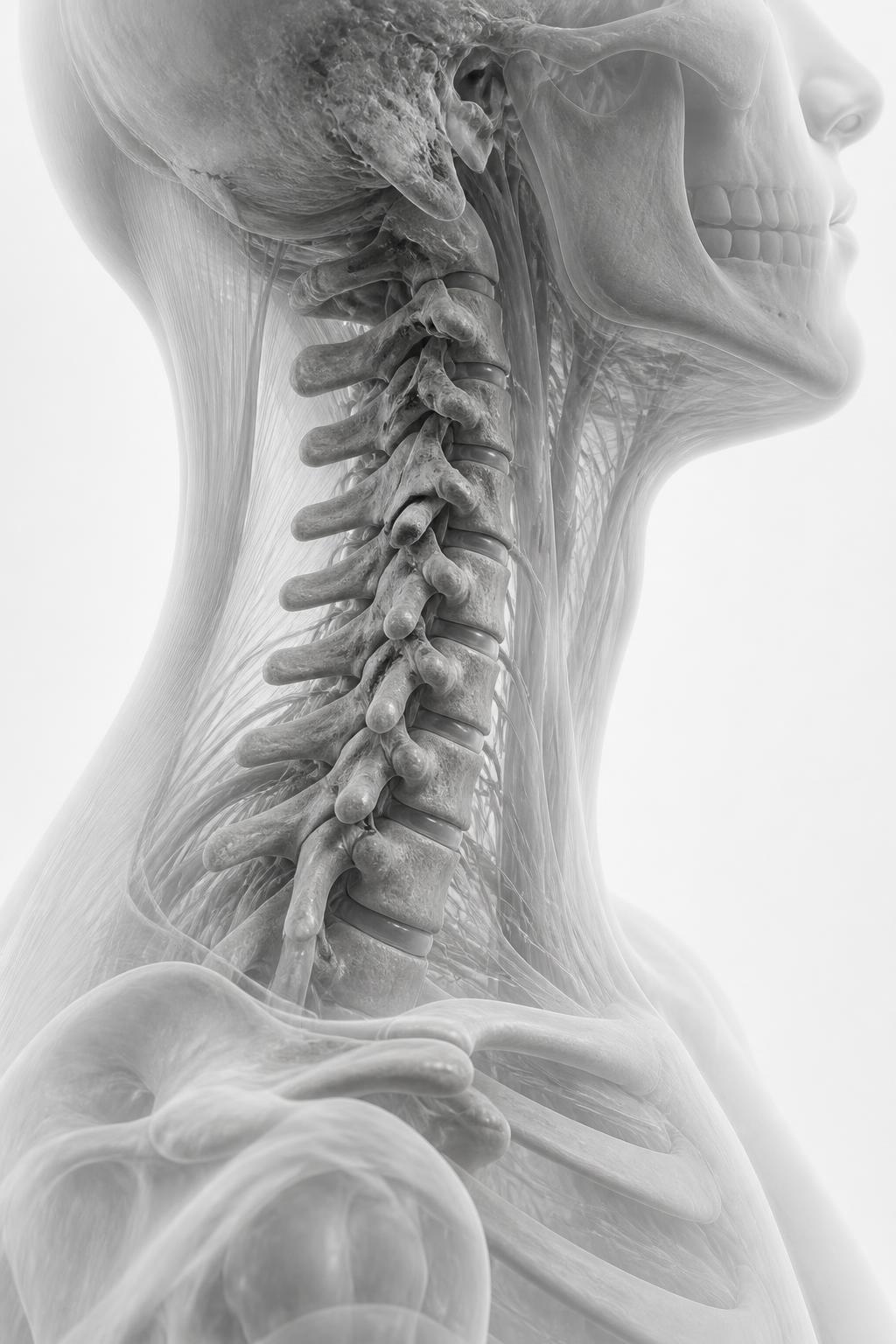
Anatomical illustration of the neck showing the cervical spine in profile

CARE OPTIONS

How is neck pain treated?

Dr. Tortland's treatment options: Dr. Tortland starts with your symptoms, then your exam and ultrasound, to find the pain source, which may be a facet joint, a loose ligament, or an entrapped nerve. Each source has its own option, and they are not interchangeable. Evidence varies by source, and results vary.

  • Test injection first: before any PRP or prolotherapy, Dr. Tortland places a diagnostic injection, mostly numbing agent, under ultrasound guidance in the office. It shows whether the neck ligaments and facet joints are the pain generator or something else is involved.
  • PRP for the neck facet joints and cervical ligaments: made in the office from your own blood at a high concentration and placed under live ultrasound. Like prolotherapy, it helps strengthen and stabilize the cervical ligaments, not only calm inflammation. Evidence is still developing.
  • Prolotherapy or Prolozone for ligament laxity: aimed at loose neck ligaments that let joints move too much and keep irritating them. Live ultrasound guides the injection. It may be an option for selected patients. Research is limited.
  • Ultrasound-guided nerve hydrodissection for an entrapped nerve: used only when exam and ultrasound confirm a peripheral nerve in the neck or shoulder is stuck. Fluid frees nerves and the tendons, ligaments and fascia around them. Not used for a pinched spinal nerve.

Physical therapy and traditional care: Physical therapy, gradual mobility and strengthening, activity and ergonomic changes, heat, and short term pain relief medication when appropriate are common starting points. Treatment should match whether the source is a joint, disc, muscle, ligament or nerve.

When other care may be needed: Persistent or recurrent pain deserves evaluation. Pain after major trauma, fever with neck stiffness, new weakness, trouble walking, or bowel or bladder changes needs urgent assessment. A spine surgeon should see you for growing weakness or pain that has not improved.

Comparison

Compare your treatment options

Common care options for this condition, who each suits, and what to know
OptionBest forWhat to know
Rehabilitation and posture workMany people with neck pain, as a common starting point.Physical therapy, gradual mobility and strengthening, activity and ergonomic changes, heat, and short term pain relief when appropriate. Care should match whether the source is joint, disc, muscle, ligament or nerve.
PRP for joints and ligaments, prolotherapy or Prolozone, nerve hydrodissectionPersistent pain once the source is found: joint, loose ligament, or entrapped nerve.Dr. Tortland starts with a test injection under ultrasound and uses live ultrasound to guide each treatment. Each option fits a different source and they are not interchangeable. Research is limited and results vary.
Spine surgeon or urgent careGrowing arm weakness, trouble walking, bladder or bowel changes, or pain that has not improved.Surgery is usually saved for worsening weakness, numbness, or pain that has not improved. Dr. Tortland says plainly when a spine surgeon should see you. Urgent symptoms need urgent care.

Common questions

Questions about neck pain

What causes neck pain?

Neck pain can start in the joints, discs, ligaments, muscles or nerves of your neck. Common causes are wear and tear, an old injury, long hours in a poor posture, and loose ligaments. Different problems can feel the same, so the first step is finding the true source.

Can neck pain be treated without surgery?

Often, yes. Many people improve with exercise, changes to daily habits, and injections aimed at the painful spot. The best choice depends on what is causing your pain. Surgery is usually saved for pain that comes with growing weakness or numbness, or that has not improved with other care.

What treatment options does Dr. Tortland offer for neck pain?

After finding the pain source, Dr. Tortland offers PRP for neck joints and ligaments, prolotherapy or Prolozone for loose ligaments, and ultrasound-guided hydrodissection for an entrapped nerve. Rehab comes first or alongside. Research varies by source. He refers you to a spine surgeon for worsening weakness or spinal cord symptoms.

Why does my neck pain keep coming back?

Often the real pain source was never pinpointed, or loose ligaments, tight muscles and posture keep irritating it. Neck posture matters because the head weighs about 11 pounds upright and far more when bent forward. Dr. Tortland examines the joints, ligaments and nerves, uses ultrasound to find the source, and builds a plan around it.

Not sure which treatment fits your condition?

Patients travel from across New England to see Dr. Tortland in Glastonbury, CT. He reviews your imaging and history, examines you with ultrasound, and recommends the most appropriate non-surgical path forward, and he tells you plainly when a surgeon is the better choice.

Request a Consultation
Ask Dr. Tortland