Direct Answer: Nerve hydrodissection uses image-guided injections to separate an irritated or entrapped nerve from surrounding scar tissue and adjacent structures. It's sometimes used in complex, previously-treated cases of thoracic outlet syndrome (TOS) when symptoms persist despite prior surgery — as in the case below, where it's being used alongside injection of surgical scar tissue itself.
A Patient's Journey From Italy
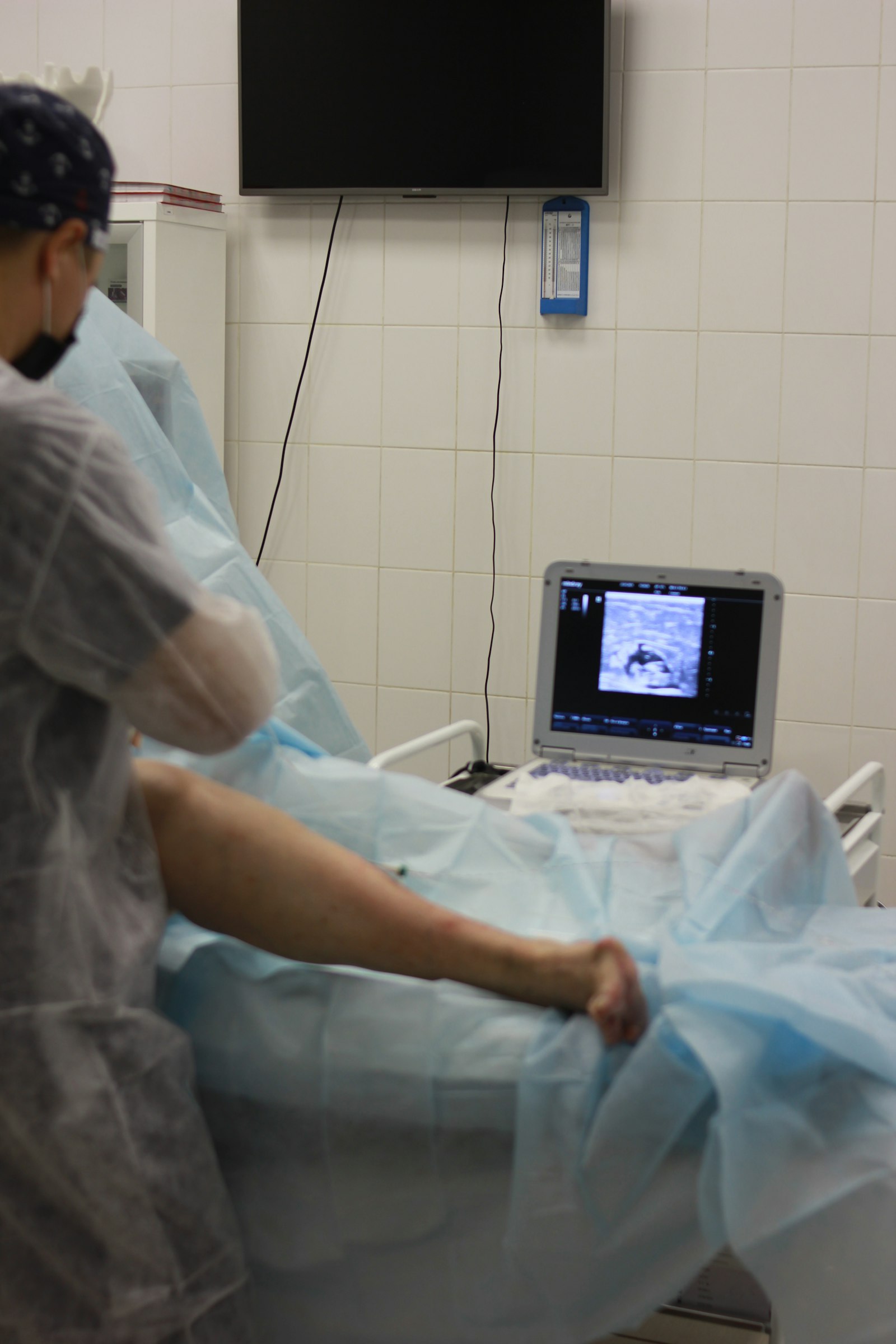
A woman in her 30s recently traveled from Bologna, Italy specifically to see Dr. Tortland for hydrodissection treatment. She is being treated for bilateral brachial plexus hydrodissection — both supraclavicular and infraclavicular — for thoracic outlet syndrome that had failed multiple prior surgeries, including a first rib resection.
Thoracic outlet syndrome is frequently misdiagnosed, and Dr. Tortland has seen a number of patients who were not well served by surgery for it, particularly spinal surgery performed for symptoms that were ultimately not spinal in origin. Because of this, he is highly selective about his surgical referral network, trusting only a small number of spine surgeons with his patients — the standard being surgeons he would trust to treat his own family. Like many patients he sees, this patient had consulted numerous physicians without relief before her evaluation.
As part of her treatment, her surgical scars were also injected — a common source of ongoing pain and restricted movement after surgery, seen frequently after total knee replacement, shoulder surgery, and even C-sections.
She had her first treatment earlier this week and is already reporting improvement. She returns for a second round of treatment before flying back to Italy.
What Is Nerve Hydrodissection?
Hydrodissection is an ultrasound-guided injection technique that separates a peripheral nerve from surrounding tissue when compression, tethering, or scarring is contributing to a patient's symptoms. It typically uses dextrose in sterile water, sometimes combined with PRP, injected precisely around the nerve under real-time ultrasound guidance. A 2025 clinical review in Muscle & Nerve notes that hydrodissection can play a role specifically in post-surgical nerve entrapment, including cases where scar tissue from a prior procedure contributes to ongoing nerve symptoms.
Thoracic Outlet Syndrome: An Often-Missed Diagnosis
Thoracic outlet syndrome refers to compression of the nerves, arteries, or veins passing between the collarbone and first rib. Symptoms — arm pain, numbness, tingling, weakness, or a sense of heaviness — can mimic cervical spine disease, which is a common source of misdiagnosis and, at times, unnecessary spinal intervention. A 2022 review in Deutsches Ärzteblatt International notes that neurogenic TOS studies remain limited in number and quality, and that surgical approach varies by surgeon experience and anatomy — underscoring why an accurate diagnosis, including a careful physical exam and appropriate imaging, is essential before any treatment, surgical or non-surgical, is considered. Recently published case reports have also described ultrasound-guided hydrodissection as a treatment option in select, refractory neurogenic TOS cases, including those involving a cervical rib or subclavius muscle involvement.
Treating Surgical Scar Tissue
Scar tissue from prior surgery can itself become a source of pain, restricted motion, or nerve irritation. Injecting scar tissue directly — sometimes combined with hydrodissection of adjacent nerves — is a treatment option in appropriately selected patients with a clear scar-related contribution to their symptoms.
Limitations — What This Does Not Do
A single patient's experience, including this one, is not a guarantee of outcome for any other patient — individual results vary considerably, particularly in complex, multiply-operated cases like thoracic outlet syndrome. Hydrodissection is not a cure for TOS, does not reverse prior surgical changes, and is not appropriate for every patient with TOS symptoms. It is not a substitute for an accurate diagnosis, and in some patients — a 2019 outcomes study in the Journal of Vascular Surgery found roughly 60% of a large neurogenic TOS cohort ultimately required surgery after physical therapy alone was insufficient — surgery remains the more appropriate option. Candidacy depends on a thorough, individualized evaluation.
Dr. Tortland's Perspective
Cases like this are a reminder of how often thoracic outlet syndrome is misunderstood, and how much unnecessary surgery can follow from an incorrect diagnosis. I'm careful about who I refer patients to for spinal surgery — only surgeons I would trust with my own family — and I try to give patients who have already been through multiple procedures an honest, thorough re-evaluation rather than another quick answer.