Could focused extracorporeal shockwave therapy (ESWT) help clinicians investigate the source of musculoskeletal pain? A 2026 hypothesis paper in Bioengineering, co-authored by Dr. Paul D. Tortland, DO, FAOASM, CAQSM, RMSK, proposes that ultrasound-localized focused shockwaves may offer a way to assess whether targeted mechanical stimulation reproduces a patient’s familiar pain. The idea is scientifically plausible and supported by preliminary studies, but it is not yet a validated diagnostic test: diagnostic accuracy has not been established.
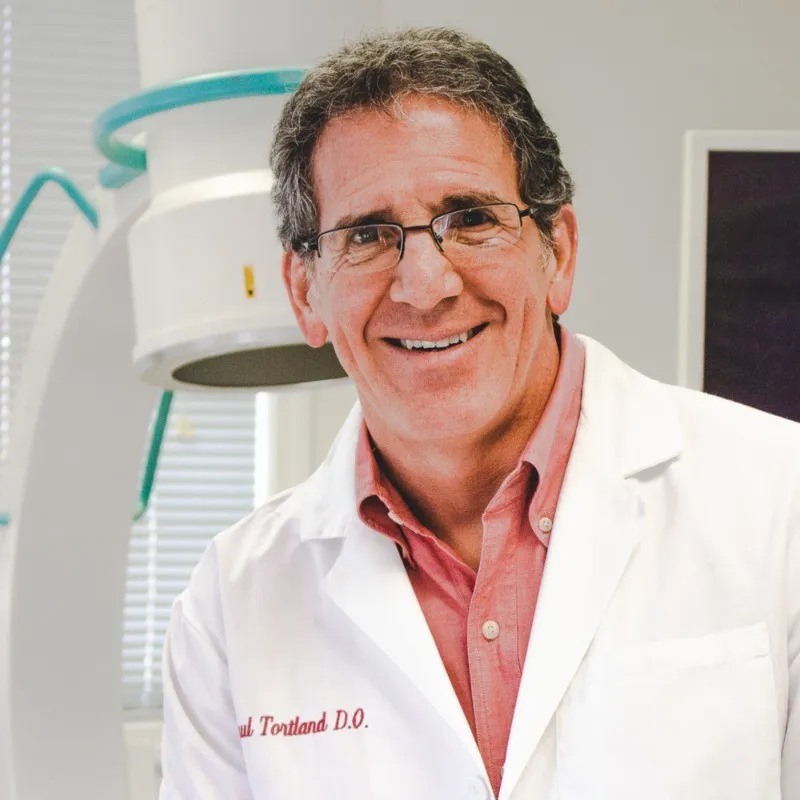
About Dr. Paul D. Tortland, DO, FAOASM, CAQSM, RMSK: Dr. Tortland is dual board-certified in Sports Medicine and Osteopathic Manipulative Medicine (OMM), and in Regenerative Medicine, and is fellowship-trained in Sports Medicine. He became the first physician in the world to earn board certification in Regenerative Medicine in 2015 and is a Diplomate of the American Board of Regenerative Medicine (ABRM, 2015). He was the first physician in Southern New England to perform platelet-rich plasma (PRP) and bone marrow aspirate (BMA) and microfragmented adipose tissue (MFAT) procedures. He is registered in musculoskeletal ultrasound (RMSK). Dr. Tortland is Associate Clinical Professor of Medicine at the University of Connecticut School of Medicine, an appointment he has held since 2002, and Associate Professor in the Division of Sports Medicine at Edward Via College of Osteopathic Medicine (VCOM), where his appointment began in January 2023. He also holds active hospital staff appointments at Hartford Hospital (Department of Internal Medicine) and St. Francis Hospital (Department of Family Practice) in Hartford, Connecticut.
This article summarizes the published hypothesis, the preliminary studies it discusses, the limitations that matter when interpreting the findings, and the research needed before this approach could be considered for clinical use. Read Original LinkedIn Article | Read the original peer-reviewed hypothesis paper in Bioengineering.
What Is Focused Extracorporeal Shockwave Therapy (ESWT)?
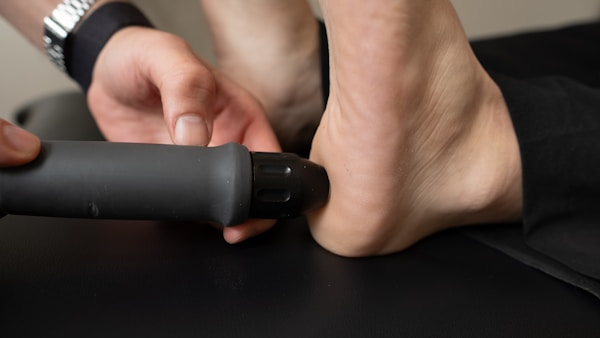
Extracorporeal shockwave therapy (ESWT) delivers acoustic energy from outside the body. Focused ESWT concentrates energy at a selected depth, while radial pressure-wave devices have different physical characteristics and energy distribution. These modalities should not be treated as interchangeable.
ESWT is primarily used as a treatment. The 2026 paper explores a different, proposed role: using a controlled mechanical stimulus to investigate whether a particular tissue may be associated with a patient’s familiar symptoms. In the proposed approach, musculoskeletal ultrasound first helps localize the structure of interest; focused shockwaves are then directed toward that target.
How Could Focused Shockwave (ESWT) Help Investigate the Source of Pain?
The hypothesis is that some symptomatic tissues may respond to mechanical stimulation differently from nearby or asymptomatic tissue. If targeted stimulation reproduces a patient’s recognizable, concordant pain, that response could provide additional information about the structure being examined.
However, pain reproduction is not proof that the target is the sole cause of symptoms, and it does not establish a definitive diagnosis. Pain can be influenced by adjacent structures, referred pain, sensitization, and individual differences in perception and reporting. A negative response would not necessarily rule out a structure either.
The proposed role is therefore complementary functional assessment, not replacement of medical history, physical examination, appropriate imaging, or established diagnostic procedures. Ultrasound provides anatomical localization; focused ESWT is proposed as a way to test a response to mechanical stimulation—not as an imaging modality.
What Does the Published Research on ESWT Show?
The 2026 paper is a hypothesis article, not a clinical trial validating a new diagnostic test. It reviews the rationale for this proposed use and discusses preliminary findings from two earlier studies. Those studies offer reasons to investigate the idea further, but they do not establish diagnostic accuracy in routine clinical practice.
Study 1: Pain thresholds in joint and peri-articular sites
In a 2024 observational study published in Diagnostics, Gialanella and colleagues studied 71 patients using focused ESWT to investigate painful sites and pain thresholds. The authors reported that shockwave stimulation elicited pain at 94.37% of sites patients identified as having the highest subjective pain. They recorded pain at 204 sites with ESWT compared with 123 sites using digital pressure, and the ESWT pain thresholds were statistically lower in affected joints than in the contralateral joints used for comparison.
These results suggest that responses to focused shockwave stimulation may contain measurable information about pain sensitivity in the study population. But the reported 94.37% is a finding about pain reproduction at self-identified painful sites—not a validated sensitivity or overall diagnostic-accuracy estimate. The study does not, by itself, establish whether ESWT can reliably identify the specific tissue responsible for pain in an unselected patient population.
Study 2: Focused shockwaves and myofascial pain in chronic low back pain
A second study, published in Biomedicines in 2024, evaluated 28 people with chronic low back pain and suspected myofascial trigger points. Investigators first identified candidate trigger points by manual palpation and then used focused ESWT to stimulate them. The study reported high rates of referred-pain reproduction for selected muscles, including the quadratus lumborum, gluteus medius, and gluteus minimus.
This is preliminary proof-of-concept evidence in a specific clinical setting. Because the candidate sites were initially identified by palpation and the study involved a small group, it does not show that focused ESWT alone can independently locate a pain generator or establish general diagnostic performance across different conditions.
What Research Is Needed Before This Could Be Used Clinically?
Prospective studies should assess whether the method can distinguish symptomatic from asymptomatic structures with acceptable accuracy and whether different clinicians can reproduce the results. Strong study designs could include blinded assessment, control sites or sham stimulation where appropriate, standardized definitions of “familiar” or “concordant” pain, quantitative stimulation thresholds, and independent reference standards. Investigators should also evaluate whether the information changes clinical decisions or improves patient outcomes—not merely whether stimulation can elicit pain.
Until that evidence exists, diagnostic focused ESWT should be regarded as investigational. It should not be marketed or interpreted as an established diagnostic test, and it should not replace a comprehensive clinical assessment.
An International Research Collaboration Built on Clinical Mentorship
This publication brought together Dr. Paul D. Tortland, DO, FAOASM, CAQSM, RMSK, and colleagues from Portugal. Tomás Ribeiro da Silva traveled to Dr. Tortland’s office in Glastonbury, Connecticut, in 2025 and spent one month training and shadowing in clinical practice. Bernardo Gaspar da Silva spent one month with Dr. Tortland in June 2026. The collaboration reflects how clinical mentorship can lead to continued academic exchange and shared investigation of questions that merit further study.
The paper lists Tomás Ribeiro da Silva and Francisca M. Costa as co-first authors. Dr. Tortland’s academic appointments are Associate Clinical Professor of Medicine at the University of Connecticut School of Medicine (since 2002) and Associate Professor in the Division of Sports Medicine at Edward Via College of Osteopathic Medicine (since January 2023). He also holds active hospital staff appointments at Hartford Hospital (Department of Internal Medicine) and St. Francis Hospital (Department of Family Practice), both in Hartford, Connecticut. These appointments and clinical affiliations provide context for his clinical and academic work; they do not substitute for independent evidence or establish the proposed diagnostic method’s validity.
Why This Research Question Matters
Musculoskeletal imaging can reveal structural changes without always identifying which finding is responsible for a person’s symptoms. Clinicians therefore interpret imaging alongside the patient’s history, examination, and other relevant information. If future research demonstrates that focused ESWT can reliably add functional information, it may have a role in selected diagnostic situations. That potential remains to be demonstrated.
Original Publication
Ribeiro da Silva T, Costa FM, Gaspar da Silva B, Ferreira-Silva N, Tortland PD. “Beyond Therapy: ESWT as a Diagnostic Modality in Musculoskeletal Medicine.” Bioengineering. 2026;13(11):1245. https://doi.org/10.3390/bioengineering13111245.
This article appears in the MDPI journal’s Special Issue, Tendon/Ligament and Enthesis Injuries: Repair and Regeneration. The journal record is available from Bioengineering.
The article is published as a hypothesis paper. Tomás Ribeiro da Silva and Francisca M. Costa contributed equally as co-first authors, as stated in the paper.
Read the original LinkedIn Article by Dr. Paul Tortland, DO
Editorial note: This article summarizes published research and a proposed diagnostic hypothesis. It is educational and does not provide individualized medical advice. The proposed diagnostic application of focused ESWT has not been validated for routine clinical diagnosis.