Short answer: no. Despite how it is sometimes marketed, platelet-rich plasma (PRP) does not regrow lost articular cartilage. PRP is a concentration of a patient's own platelets and their growth factors, and it can meaningfully calm joint inflammation and improve pain and function for many patients with early-to-moderate arthritis. But regenerating true hyaline cartilage, the smooth, shock-absorbing tissue that cushions a joint, is a different biological problem, and current evidence does not show that PRP solves it.
Why Cartilage Is So Hard to Regrow
Articular cartilage is unlike almost every other tissue in the body. It has no blood supply, no nerve supply, and only a sparse population of cells (chondrocytes) scattered through a dense matrix. That lack of blood flow is why cartilage heals so poorly after injury or wear: the body cannot deliver its usual repair machinery the way it can to skin, muscle, or bone.
This matters when evaluating any treatment that claims to "regenerate" cartilage. When a treatment does show benefit, it is worth asking what is actually improving. Pain, inflammation, and function are not the same thing as new cartilage.
What PRP Actually Does, Biologically
PRP is created by drawing a patient's blood and processing it to concentrate the platelets. In our practice, PRP is prepared to roughly 12 to 15 times baseline concentration. Platelets carry growth factors, including PDGF, TGF-β, VEGF, and IGF-1, along with signaling proteins that influence the joint environment once injected.
In laboratory and animal studies, these factors reduce inflammatory signals (such as IL-1β and TNF-α) that drive cartilage breakdown in osteoarthritis, and they can stimulate chondrocytes to produce matrix proteins. That is a real and plausible mechanism, but it is an anti-inflammatory and cartilage-protective effect on existing tissue, not a process of building new cartilage. The gap between influencing cells in a dish and regrowing a meaningful thickness of cartilage in a human knee has not been closed.
Who May Benefit From PRP
Even without regrowing cartilage, PRP has a legitimate role for the right patient. Good candidates typically include people with:
- Early-to-moderate osteoarthritis, where cartilage and joint space remain and inflammation is a significant driver of pain
- Chronic tendon or soft-tissue irritation alongside joint pain
- A preference for an evidence-informed, non-surgical option before repeated corticosteroid injections or surgery
- A goal of delaying or avoiding joint replacement while function remains manageable
PRP is generally a poor fit for advanced, bone-on-bone arthritis, where there is little cartilage or joint space left to protect.
What the Current Evidence Shows
A systematic review and meta-analysis in Osteoarthritis and Cartilage Open (Prodromidis et al., 2022) examined 14 studies with 1,099 patients that measured cartilage on cross-sectional imaging before and after PRP. PRP was not associated with a significant increase in cartilage thickness, and in the randomized trials, cartilage content did not change significantly compared with no PRP. The authors recommended that PRP not be given with the intention of growing cartilage.
A separate meta-analysis in the Journal of Arthroplasty (Sax et al., 2022) reviewed 24 studies. PRP improved pain and function scores in most comparisons with hyaluronic acid, corticosteroid, and saline, although heterogeneity between studies was high. When structural changes were assessed, including cartilage thickness on MRI, no differences were found.
This pattern, real symptomatic benefit without structural regeneration, is the most accurate way to describe what PRP does for arthritic joints. Not all PRP is prepared the same way, and differences in concentration, white blood cell content, technique, and number of treatments likely explain some of the inconsistency across studies.
When Non-Surgical Care May Be the Right Next Step
For early-to-moderate arthritis, where the goals are less pain, better function, and staying active, a comprehensive non-surgical plan is often reasonable. It may include PRP alongside physical therapy, activity modification, weight management where relevant, and other orthobiologic options. The goal is symptom control and function, not tissue regeneration, and patients should understand that before starting.
When Surgery May Be More Appropriate
When imaging and examination show advanced, bone-on-bone arthritis with significant deformity or instability, when pain and function remain severely limited despite a genuine trial of non-surgical care, or when there is a structural problem, such as a large unstable meniscus tear or significant ligament injury, referral to an orthopedic surgeon is the responsible recommendation. Dr. Tortland refers for surgical evaluation whenever that is in the patient's best interest.
What PRP Does Not Do
- It does not regrow, regenerate, or restore lost hyaline cartilage.
- It is not a substitute for surgery when advanced structural damage, instability, or deformity make surgery the better option.
- It does not guarantee results; improvement varies in degree and duration, is not permanent, and repeat treatment is sometimes needed.
- It is not a stand-alone cure and works best within a broader, individualized plan.
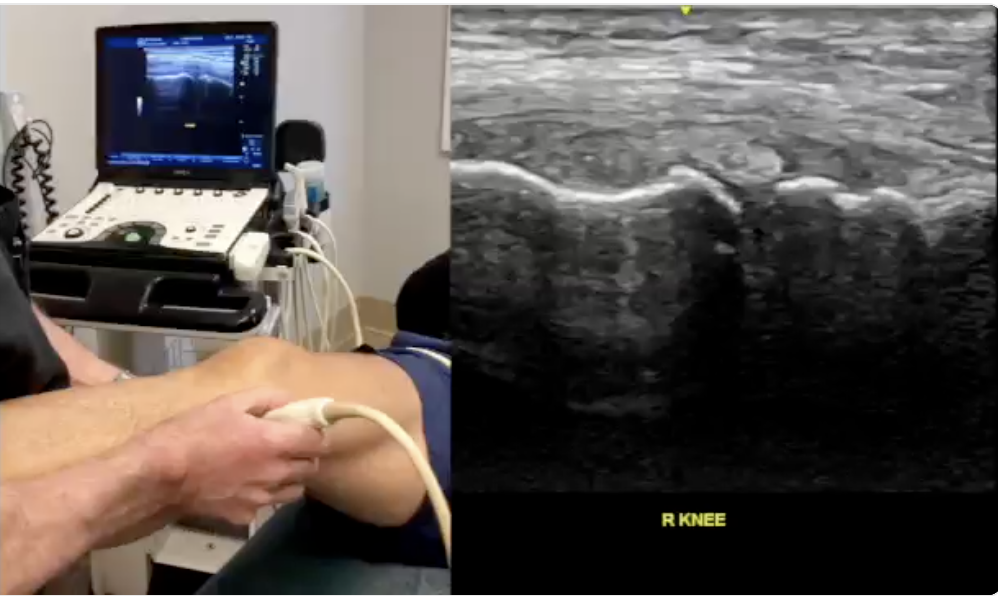
- It depends on proper diagnosis and patient selection, including diagnostic musculoskeletal ultrasound.
Dr. Tortland's Perspective
I hear this question often, and patients deserve a straight answer: PRP does not regrow cartilage, and I do not want anyone choosing this treatment because they were told it would. What PRP can do, when it is prepared properly and used in the right patient, is calm the inflammatory environment in a joint and meaningfully improve pain and function. For the right person, that is a valuable outcome. My approach is the same in every case: validate that the pain is real, investigate the cause with a thorough evaluation and diagnostic ultrasound, and discuss every option, including surgery when that is the better path, before recommending regenerative treatment.
Related Questions
- Does PRP work for knee arthritis?
- Why does PRP concentration vary between providers?
- What is BMAC, and can it rebuild cartilage?
- What are the non-surgical options for knee arthritis?
Next Step
If you are dealing with joint pain and want an honest, evidence-based conversation about whether PRP or another treatment fits your situation, start with a thorough evaluation, not a sales pitch. Schedule a consultation for a clear diagnosis, a live musculoskeletal ultrasound exam, and a realistic discussion of every option, surgical and non-surgical.
References
- Prodromidis AD, et al. The role of Platelet-Rich Plasma (PRP) intraarticular injections in restoring articular cartilage of osteoarthritic knees: a systematic review and meta-analysis. Osteoarthr Cartil Open. 2022;4(4):100318. doi:10.1016/j.ocarto.2022.100318
- Sax OC, et al. The Efficacy of Platelet-Rich Plasma for the Treatment of Knee Osteoarthritis Symptoms and Structural Changes: A Systematic Review and Meta-Analysis. J Arthroplasty. 2022;37(11):2282-2290. doi:10.1016/j.arth.2022.05.014