Platelet-rich plasma (PRP) can meaningfully reduce pain and improve function in mild-to-moderate hip and knee osteoarthritis, and current evidence consistently ranks it above corticosteroid and hyaluronic acid injections for durability of relief. It does not regrow cartilage, and it isn't a substitute for surgery when joint damage is too advanced. Here's what the research actually says, not the marketing version.
What is Platelet-Rich-Plasma (PRP)? And How Can it be Used to Treat Arthritis?
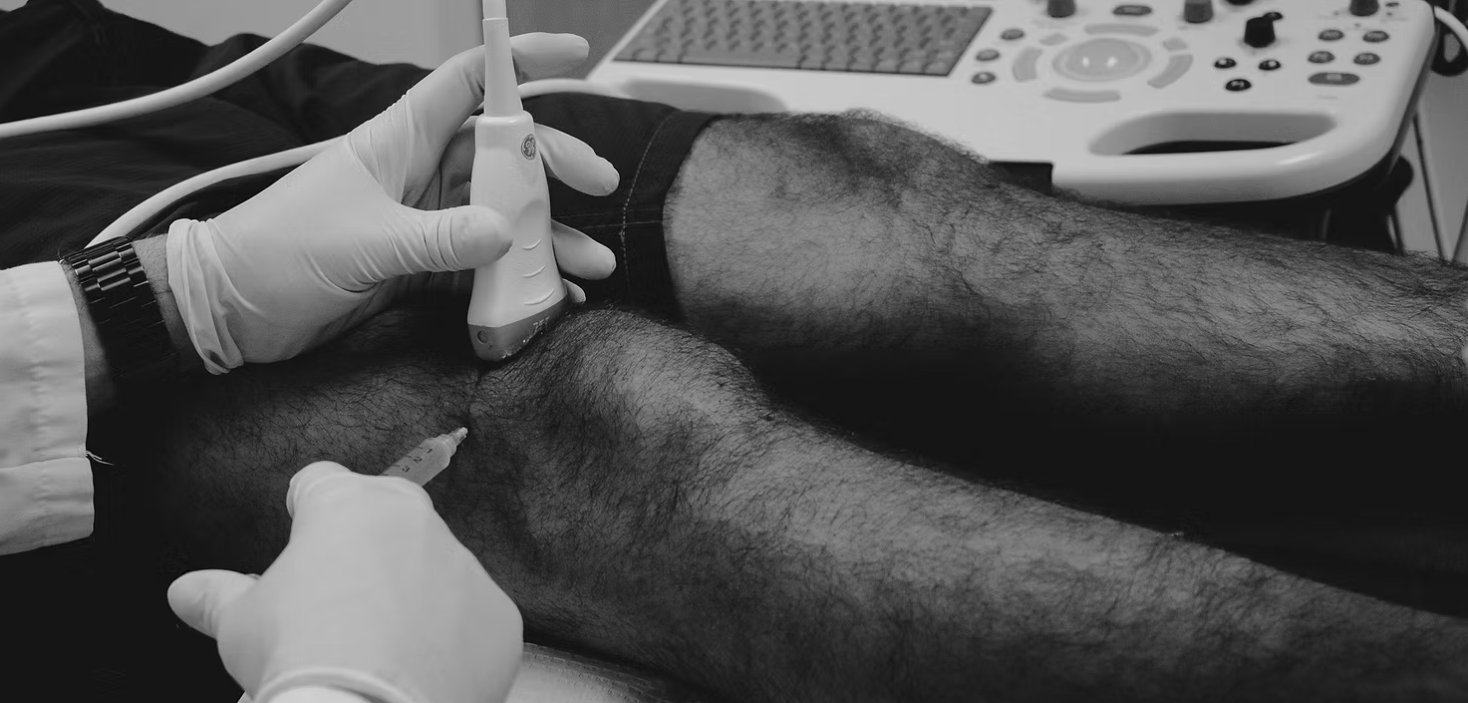
Platelet-rich plasma is made by drawing a small amount of your own blood and concentrating the platelets, cells that release growth factors involved in tissue repair and inflammation control. Injected into an arthritic joint under ultrasound guidance, the goal is to calm inflammation and support the joint's own healing response, not to manufacture new cartilage from scratch.
Commercial bedside PRP kits typically yield about 2 to 7 times baseline platelet concentration. Dr. Tortland's on-site lab, in use since 2007, custom-formulates each patient's PRP to 12 to 15 times baseline, a distinction that matters, because platelet dose is one of the biggest sources of inconsistency across PRP studies and PRP providers.
What the Evidence Shows for Knee Osteoarthritis
The clearest signal comes from the American Academy of Orthopaedic Surgeons' 2024 Technology Overview (Dubin et al., JAAOS), which reviewed 54 studies and found PRP outperformed placebo, hyaluronic acid, corticosteroids, exercise therapy, and oral medications on validated pain and function scores. The European Alliance of Associations for Rheumatology (EULAR) and the ESSKA-ICRS 2024 consensus both now recommend PRP as a reasonable second-line injectable for early-to-moderate knee OA after conservative care hasn't been enough, and the American Medical Society for Sports Medicine's position statement (Finnoff et al., 2021) concludes PRP outperforms steroid or hyaluronic acid injections specifically in younger patients with mild-to-moderate disease.
More recent data reinforces this. A 2025 meta-analysis of 15 double-blind RCTs (1,632 knees, Kellgren-Lawrence grades I-III) found PRP produced significantly better WOMAC pain and total scores than hyaluronic acid at 12 months. A separate 2025 systematic review of six RCTs (1,162 patients) found PRP performed no differently than corticosteroids as a standalone injection, but outperformed both physical therapy and exercise therapy alone, and produced better results than either treatment when combined. Leukocyte-poor PRP formulations in particular show the most consistent pain and function benefit in mild-to-moderate disease.
The honest caveat across nearly every one of these reviews: PRP preparation methods, platelet counts, injection protocols, and follow-up periods vary enormously from study to study, which is exactly why standardized, high-concentration, physician-administered PRP, rather than a one-size-fits-all commercial kit, tends to produce more reliable outcomes.
What the Evidence Shows for Hip Osteoarthritis
Hip OA has fewer trials than knee OA, but the direction of the evidence is similar. A 2024 systematic review of five randomized trials (Almutairi and Alazzeh, Cureus) found that every included study showed significant pain reduction and functional improvement with intra-articular PRP, with no major adverse events reported. A separate meta-analysis comparing PRP against hyaluronic acid for hip OA found the two produced similarly beneficial short-term outcomes on WOMAC, VAS pain, and Harris Hip Score, with PRP's benefit trending more durable at 12 months in at least one head-to-head trial of 111 patients.
Who May Be a Good Candidate
The evidence base is strongest for patients with mild-to-moderate hip or knee osteoarthritis (Kellgren-Lawrence grades I-III) who have already tried, and not gotten enough relief from, activity modification, physical therapy, or anti-inflammatory medication. PRP is generally not recommended as a first step before conservative care has had a real trial, and it is not the AAHKS-endorsed option for severe, end-stage (grade IV) joint disease.
When Surgery May Be the Better Option
If imaging shows bone-on-bone joint space loss, significant deformity, or mechanical symptoms like locking or instability, PRP is unlikely to provide meaningful relief, and a referral for surgical evaluation is the honest recommendation, not a sales pitch for one more injection. Part of a real evaluation is telling a patient directly when regenerative treatment isn't the right fit for their joint.
Limitations: What PRP Does Not Do
This is the section most PRP marketing skips, and it shouldn't be skipped.
- PRP does not regrow cartilage. No high-quality evidence supports claims of cartilage regeneration in human joints from PRP alone. Its documented benefit is pain and function improvement, not tissue reconstruction.
- It is not a substitute for surgery when surgery is genuinely the better option, particularly in advanced, bone-on-bone arthritis.
- Results vary and aren't guaranteed or necessarily permanent. Most positive trials measure benefit out to 6-12 months; some patients need repeat treatment.
- Candidacy depends on a real evaluation, imaging review, physical exam, and an honest discussion of arthritis stage, not a phone consult or a one-size-fits-all protocol.
- Preparation matters. Low-concentration commercial kit PRP and high-concentration, physician-formulated PRP are not clinically interchangeable, and most negative trials use the former.
Dr. Tortland's Perspective
"Patients come in having read that PRP either cures arthritis or does nothing at all, the truth is in between, and it depends heavily on how advanced the arthritis is and how the PRP itself is prepared," says Dr. Tortland. "My approach starts with an honest diagnosis: live musculoskeletal ultrasound in the same visit, a real look at how much joint space and cartilage remain, and then a candid conversation about whether PRP, cellular orthobiologics, or a surgical referral is the right next step. I'd rather tell a patient PRP isn't going to help them than have them pay for a treatment that won't work."
For patients who are candidates but whose arthritis is more advanced, cellular orthobiologic treatment (BMAC or MFAT) is sometimes used first, often followed by a PRP procedure 4 to 6 weeks later as part of a staged approach.
Next Step
If you're weighing PRP for hip or knee arthritis, the first useful step isn't another injection, it's an accurate diagnosis of how advanced the arthritis actually is. Schedule a comprehensive evaluation, including same-visit diagnostic ultrasound, to find out honestly whether you're a candidate.