Direct Answer: Cervical instability refers to abnormal or excessive motion between cervical vertebrae that may occur when the structures that help stabilize the spine — including the facet joint capsules and other ligaments — have been injured, stretched, or weakened. Causes can include trauma such as whiplash, degenerative changes associated with cervical spondylosis, and prolonged loading or posture. Dr. Tortland uses the term tissue creep to describe his clinical observation that prolonged, low-level tension may contribute to gradual soft-tissue elongation. The diagnosis requires more than symptoms alone: a careful history and examination, combined with appropriate imaging, are important to determine whether abnormal motion is actually present.
What Is Cervical Instability?
The cervical spine is designed to move while maintaining controlled alignment. Ligaments, facet joints, discs, muscles, and other soft tissues work together to stabilize each motion segment.
When stabilizing structures become injured or lax, abnormal motion between adjacent vertebrae can occur. Capsular ligament laxity has been proposed as one contributor to chronic neck pain and cervical instability, particularly after whiplash and other injuries. However, cervical instability is not a diagnosis that should be assumed simply because someone has neck pain. The clinical significance of abnormal motion depends on the patient's symptoms, examination, history, and imaging findings.
What Is “Tissue Creep”?
Tissue creep is Dr. Tortland's term for the gradual deformation of soft tissue that can occur when a structure is exposed to sustained, low-level tension.
Think about a clothesline. A new rope may initially be tight, but if it carries a constant load for a prolonged period, it can gradually sag. Dr. Tortland uses this analogy to explain how prolonged mechanical stress may affect supporting soft tissues.
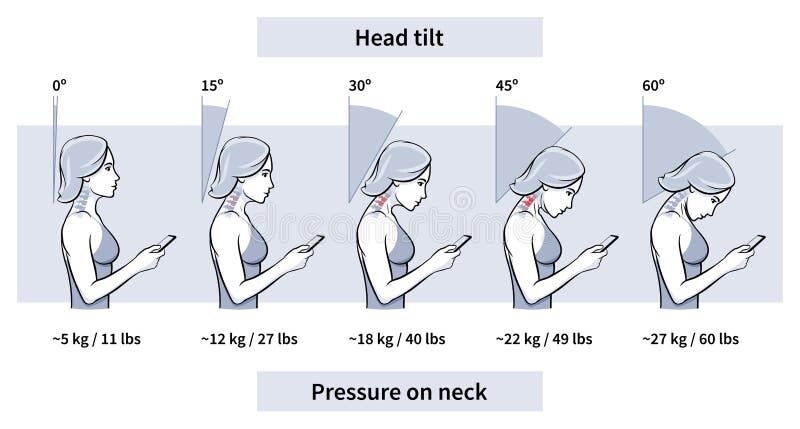
In the neck, prolonged forward-head or flexed postures — such as spending extended periods looking down at a phone, tablet, or computer — increase mechanical demands on the cervical spine. Biomechanical research has found that cervical flexion increases compressive loading compared with a neutral posture, and other research has demonstrated changes in cervical mechanical and neuromuscular behavior after sustained flexion. These findings support the importance of posture and loading, but they do not prove that smartphone use alone causes cervical ligament instability.
What Causes Cervical Instability?
Cervical instability can develop when the structures that normally control and stabilize movement between the vertebrae become injured, stretched, weakened, or otherwise unable to adequately control motion.
Common causes and contributing factors include:
-Trauma and Whiplash
A sudden acceleration-deceleration injury, such as whiplash from a motor-vehicle accident, can strain the ligaments and facet joint capsules of the cervical spine. In some patients, persistent ligamentous laxity may contribute to abnormal motion and chronic neck symptoms.
-Cervical Spondylosis and Degenerative Changes
Age-related and degenerative changes can alter the normal mechanics of the cervical spine. As discs and facet joints degenerate, disc spaces may narrow and the surrounding tissues may be subjected to different mechanical loads. These changes can contribute to altered motion between cervical segments.
-Prolonged Mechanical Loading and “Tissue Creep”
Ligaments and other connective tissues respond to sustained mechanical loading. Dr. Tortland uses the term “tissue creep” to describe his clinical observation that prolonged, low-level tension may gradually contribute to soft-tissue elongation.
One way to visualize this is to think of a clothesline. A new rope may initially remain tight, but if it supports heavy, wet sheets and towels continuously, it can gradually sag. Connective tissues can similarly undergo deformation when exposed to sustained loading.
Prolonged forward-head or flexed-neck positions — including extended periods looking down at phones, tablets, or computers — can increase the mechanical demands placed on the cervical spine. However, “text neck” does not by itself establish that cervical ligament instability is present. Symptoms and suspected instability require appropriate clinical evaluation.
-Previous Cervical Injury or Surgery
Prior injury or surgery can change the biomechanics of the cervical spine. Depending on the location and nature of the injury or procedure, adjacent segments or supporting structures may experience altered loading and movement.
-Muscle and Neuromuscular Factors
The muscles surrounding the cervical spine also contribute to dynamic stability. Changes in muscle endurance, coordination, strength, or motor control can affect how the neck responds to sustained or repetitive loading. These factors can contribute to symptoms even when structural instability is not present.
The important distinction: neck pain, stiffness, headaches, or symptoms associated with prolonged device use do not automatically mean that a cervical segment is unstable. The goal of evaluation is to determine whether abnormal motion or another identifiable structural or functional problem is actually present.
What Does Cervical Instability Feel Like?
Symptoms depend on the location and cause of the abnormal motion. Some patients report chronic or activity-related neck pain, stiffness, headaches, or symptoms that began after trauma. Others may have symptoms involving the shoulder or arm.
These symptoms are nonspecific and can occur with many other cervical conditions. Neck pain, for example, does not establish that instability is the cause. A diagnosis should be based on the complete clinical picture rather than symptoms alone.
How Is Cervical Instability Diagnosed?
The first step is a detailed history and physical examination. The clinician needs to understand when symptoms began, whether there was trauma, what movements aggravate symptoms, and whether neurological symptoms are present.
Imaging may then be used when the clinical picture warrants it. Conventional X-rays, MRI, CT, and dynamic studies each answer different questions.
Flexion-Extension X-rays
Flexion-extension radiographs can demonstrate changes in vertebral alignment or motion between flexion and extension. Their usefulness varies with the clinical situation, and studies have found limitations in both adequacy and interpretation. They should therefore be selected and interpreted in the context of the patient's history and examination rather than treated as a standalone test for instability.
Digital Motion X-ray (DMX)
Digital Motion X-ray, also called videofluoroscopy, records the cervical spine continuously while the patient moves through specific positions. Unlike a conventional static X-ray, it allows the clinician to observe motion as it occurs.
Research has investigated videofluoroscopy for symptomatic cervical instability following whiplash and suggests that dynamic imaging can demonstrate patterns of intervertebral motion that may not be apparent on static imaging. At the same time, the evidence base is still developing, and DMX should not be presented as a universally validated replacement for MRI, CT, or conventional radiography.
When Dr. Tortland suspects a dynamic problem that may not be adequately characterized by static imaging, he may consider dynamic imaging as part of a broader diagnostic evaluation.
What Does the Research Say About “Text Neck”?
The term text neck is commonly used to describe neck symptoms associated with prolonged device use and sustained flexed posture. There is biomechanical evidence that cervical flexion changes loading patterns in the spine.
One study of healthy adults found that cervical flexion increased cervical compression compared with a neutral position, while anterior shear increased substantially at some upper cervical levels. Another study found that sustained full cervical flexion produced measurable changes in cervical stiffness and neuromuscular responses.
These studies help explain why prolonged flexed posture can place additional mechanical demands on the neck. They do not establish that “text neck” is itself a distinct disease, nor do they prove that prolonged phone use causes ligamentous cervical instability in every person.
What the Evidence Does — and Does Not — Show
The relationship between cervical ligament laxity, abnormal motion, chronic neck pain, and treatment remains an area of ongoing research.
There is published literature describing cervical instability and capsular ligament laxity, as well as studies investigating dynamic imaging and regenerative injection approaches. However, much of the literature on prolotherapy and platelet-based injections for cervical instability consists of case series, small studies, or narrative reviews rather than large randomized controlled trials.
For example, a small prospective case series reported reductions in pain and cervical translation following fluoroscopically guided cervical prolotherapy. A separate small case series reported improvements in neck pain and function after treatment with concentrated platelet products and prolotherapy. These findings are encouraging enough to justify further study, but they are not sufficient to establish that these treatments reliably restore cervical stability or prevent surgery.
How Is Cervical Instability Treated?
Treatment depends on the underlying cause, severity, symptoms, and whether objective instability is actually present.
- Conservative Treatment
Depending on the diagnosis, treatment may include exercise, physical therapy, activity modification, ergonomic changes, and other non-surgical approaches. Addressing posture and prolonged flexed positioning may be useful when sustained mechanical loading is contributing to symptoms.
- Prolotherapy
Prolotherapy is an injection-based treatment that has been studied for ligament-related musculoskeletal pain. There is some clinical literature involving cervical pain and traumatic cervical instability, but the evidence remains limited and heterogeneous.
- PRP and Other Orthobiologics
Platelet-rich plasma and other orthobiologic injections may be considered in selected patients when the clinical diagnosis supports a soft-tissue or joint-based pain generator. The goal is not simply to inject the painful area; treatment should be based on the structures involved, the underlying diagnosis, and appropriate image guidance.
For cervical instability specifically, evidence for PRP remains limited. A 2021 case series involving concentrated platelet products and prolotherapy reported improvement in pain and function, but larger controlled studies are needed before firm conclusions can be drawn about efficacy.
Dr. Tortland's Approach: Diagnose the Motion, Not Just the Pain
Cervical instability can be difficult to evaluate because symptoms overlap with many other conditions. Dr. Tortland's approach begins with the diagnosis rather than assuming that neck pain automatically represents instability.
His clinical philosophy is:
Validate. Investigate. Regenerate.
That means first determining whether the symptoms and examination actually point toward a cervical motion or soft-tissue problem; investigating the anatomy and biomechanics with appropriate diagnostic tools; and only then considering whether a regenerative treatment has a rational role.
When Should You Be Evaluated?
An evaluation may be appropriate when persistent neck symptoms follow trauma, when symptoms do not fit a straightforward diagnosis, or when symptoms continue despite appropriate conservative treatment.
New or progressive neurological symptoms, significant weakness, problems with coordination or walking, bowel or bladder changes, or severe symptoms after significant trauma require prompt medical evaluation rather than an elective regenerative treatment consultation.
Bottom Line
Cervical instability describes abnormal motion between cervical vertebral segments and can have multiple causes, including trauma and degenerative changes. Prolonged neck flexion increases cervical mechanical loading, which provides a plausible biomechanical explanation for why sustained “text neck” posture can contribute to neck strain — but posture alone does not establish ligamentous instability.
Dynamic imaging such as DMX may provide additional information in carefully selected patients when abnormal motion is suspected, although the diagnostic evidence is still evolving. Prolotherapy and PRP have been studied for cervical pain and instability, but current evidence is not strong enough to guarantee that these treatments will restore stability or eliminate the need for surgery in every patient.
The most important step is an accurate diagnosis. Diagnosis first. Treatment second.
Frequently Asked Questions
What is cervical instability?
Cervical instability is abnormal or excessive movement between cervical spinal segments. It may be associated with ligament injury or laxity, trauma, or degenerative changes, but neck pain alone does not establish the diagnosis.
Can looking down at my phone cause cervical instability?
Prolonged neck flexion increases mechanical loading on the cervical spine, and sustained flexion can alter cervical mechanical and neuromuscular behavior. However, current evidence does not show that phone use alone causes clinically significant cervical ligament instability in every person.
What is tissue creep?
Tissue creep is a term Dr. Tortland uses to describe gradual soft-tissue deformation that may occur with prolonged, low-level tension. He uses a clothesline analogy to explain how sustained mechanical loading could affect supporting cervical tissues.
Can an MRI show cervical instability?
MRI is excellent for evaluating many structural abnormalities, including discs, spinal cord, nerves, and other soft tissues, but a conventional MRI captures the spine in a relatively static position. When abnormal motion is suspected, dynamic imaging may provide additional information.
What is a Digital Motion X-ray?
Digital Motion X-ray (DMX), or videofluoroscopy, continuously records X-ray images while the cervical spine moves. It can allow assessment of dynamic alignment and intervertebral motion that may not be visible on a static image.
Can PRP treat cervical instability?
PRP has been studied as part of regenerative injection approaches for cervical pain, including small case series involving cervical instability. However, evidence specific to cervical instability remains limited, so PRP should be considered selectively rather than as a guaranteed treatment.
Can prolotherapy treat cervical instability?
Small studies and case series have reported improvements in pain and cervical motion after cervical prolotherapy. Larger controlled studies are needed to determine how reliably prolotherapy changes instability and long-term outcomes.
Does cervical instability always require surgery?
No. Treatment depends on the cause and severity of the instability, symptoms, neurological findings, and overall clinical picture. Some patients may be managed non-surgically, while others require surgical evaluation.
References & Further Reading
Cervical spine joint loading with neck flexion — biomechanical study evaluating cervical compression and shear during flexion.
The effect of static neck flexion on mechanical and neuromuscular behaviors of the cervical spine — study of sustained cervical flexion in healthy adults.
Chronic neck pain: making the connection between capsular ligament laxity and cervical instability — review discussing cervical ligament laxity and instability.
Diagnostic Accuracy of Videofluoroscopy for Symptomatic Cervical Spine Injury Following Whiplash Trauma — study investigating dynamic videofluoroscopy in symptomatic post-whiplash patients.
Fluoroscopically guided cervical prolotherapy for instability — small prospective case series examining pain and cervical translation after prolotherapy.
Regenerative Injection Treatments Utilizing Platelet Products and Prolotherapy for Cervical Spine Pain — small case series of concentrated platelet products and prolotherapy.