Does Shoulder Pain Always Mean Surgery Is Coming?
Shoulder pain from rotator cuff tendinopathy or calcific tendinitis is one of the more common reasons active adults end up considering surgery — and one of the conditions where non-surgical, image-guided treatment can genuinely change that trajectory for the right patient. Most patients do not end up needing an operation.
What Is Calcific Tendinitis and How Is It Treated Without Surgery?
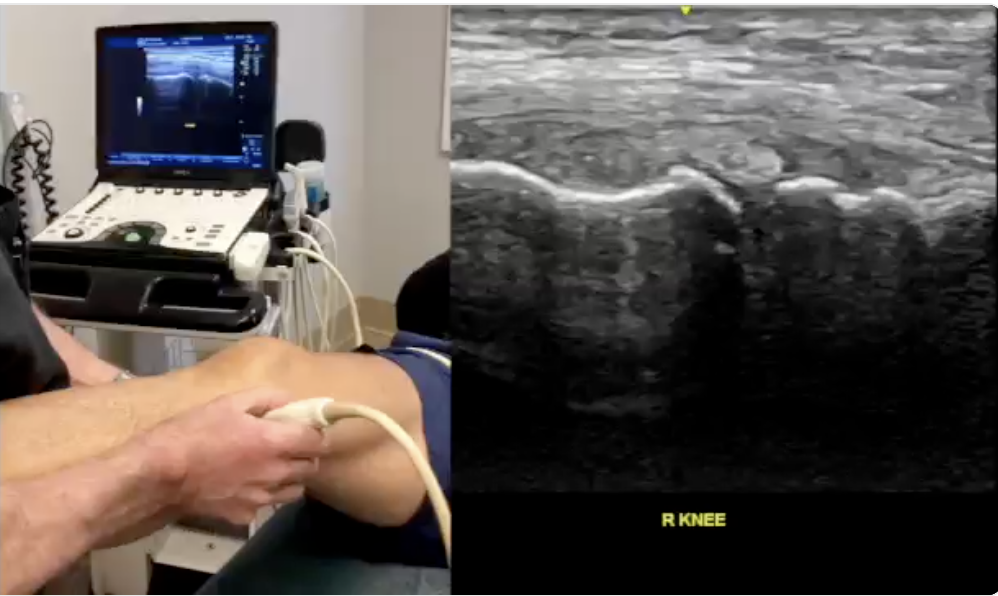
Calcific tendinitis, where calcium deposits build up within the rotator cuff tendons, is a good example of how far non-surgical technique has come. Ultrasound-guided needling of the calcium deposit — sometimes paired with PRP, sometimes with a corticosteroid injection — is now a well-established first-line option, and one that keeps most patients out of the operating room entirely.
Does Adding PRP to Needling Actually Improve Outcomes?
A 2026 comparative cohort study of 93 patients with rotator cuff calcific tendinitis looked specifically at needling followed by either PRP or corticosteroid injection. In patients with smaller, more contained calcium deposits, needling followed by PRP produced better pain relief at 12 months than needling followed by corticosteroid, though shoulder function scores were similar between the two groups.
Does the Size of the Calcium Deposit Matter?
Yes. In patients with larger, more diffuse deposits, adding PRP after needling led to faster resorption of the calcium on imaging within two weeks compared to conservative care alone, though this didn't consistently translate into better long-term clinical outcomes. This distinction matters when setting expectations, since not every patient with calcific tendinitis will benefit from PRP to the same degree.
How Often Does Calcific Tendinitis Actually Require Surgery?
In the study above, only 4 of the 93 patients ultimately required arthroscopic surgery. The honest takeaway is that image-guided needling — with or without PRP — is a genuinely effective non-surgical option for most patients with rotator cuff calcific tendinitis, and it's worth trying before considering surgery in nearly every case.
What About Rotator Cuff Tendinopathy Without Calcification?
For rotator cuff tendinopathy more broadly — without calcification — a similar principle holds: a proper diagnosis, targeted physical therapy, and orthobiologic injections where appropriate can resolve the large majority of cases without ever reaching a surgical discussion. The specific treatment plan depends heavily on the underlying diagnosis, which is why imaging and a thorough physical exam matter before treatment begins.
When Does Surgery Become the Right Option for Shoulder Pain?
Surgery remains an option for the shoulders that don't respond to a genuine trial of non-surgical care — not the starting point for the ones that do. Full-thickness rotator cuff tears, significant instability, and cases that fail to improve after appropriate conservative and orthobiologic treatment are the scenarios where a surgical discussion becomes appropriate.
Reference
According to PubMed: Demirtas I, Kilinc O, Tanrikulu AN, Elci S, Altin Y, Gunaydin F. Ultrasound-Guided Needling Without Lavage Followed by Platelet-Rich Plasma or Corticosteroid in Rotator Cuff Calcific Tendinitis: A Comparative Cohort Study. J Clin Med. 2026. DOI: 10.3390/jcm15155848