What Is PRP and How Does It Work for Knee Arthritis?
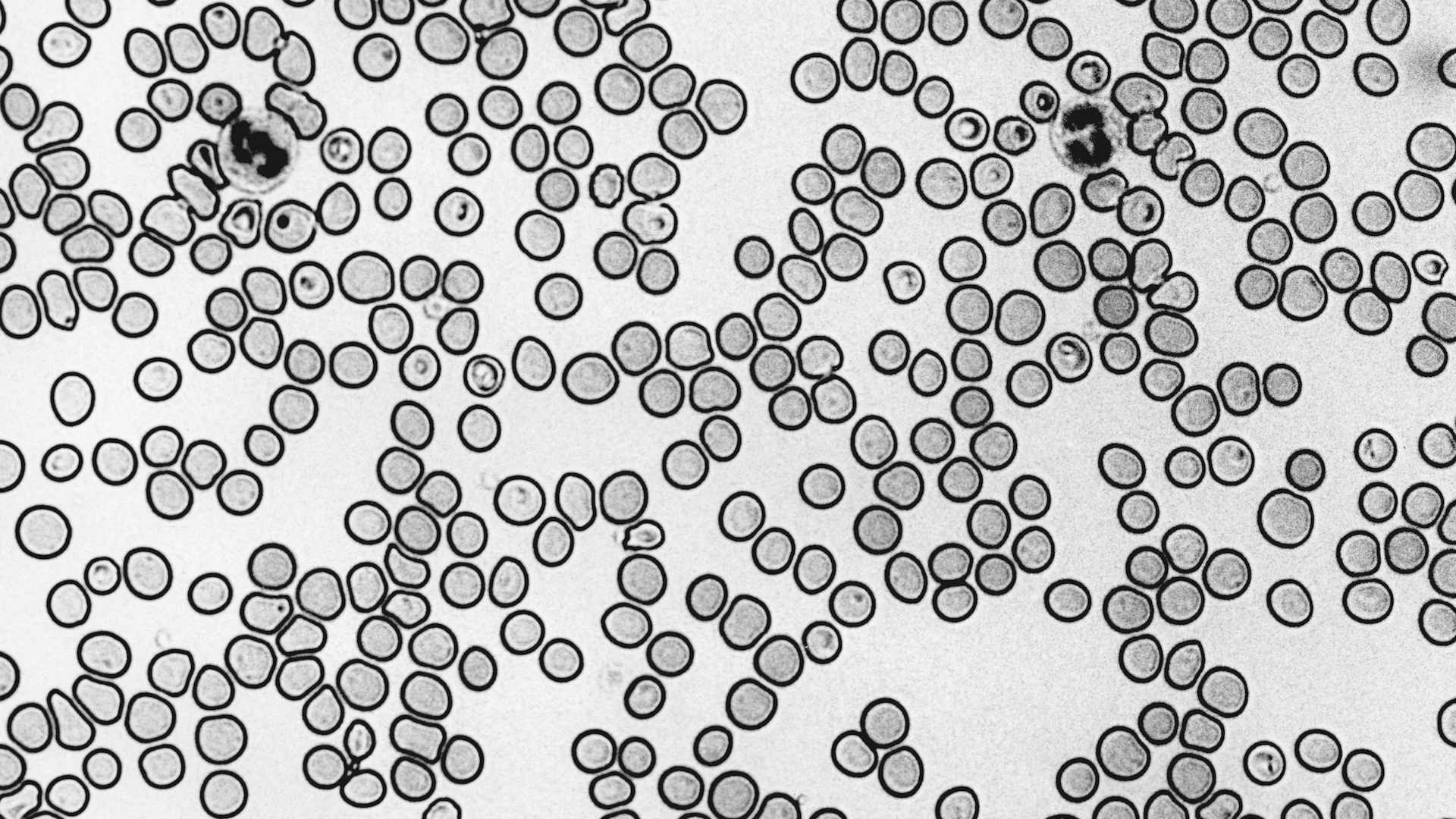
Platelet-rich plasma (PRP) is prepared from a small sample of a patient's own blood. The sample is spun in a centrifuge to separate and concentrate platelets, which are then re-injected directly into the arthritic joint under ultrasound guidance. Platelets carry growth factors and signaling proteins that play a role in the body's natural healing and anti-inflammatory processes. Inside an arthritic knee, the goal of a PRP injection is to calm the low-grade inflammation that drives much of the pain associated with osteoarthritis, and to support a healthier environment within the joint.
It's important to be precise about what this means clinically: PRP does not regenerate cartilage that has already been lost. Osteoarthritis is, at its core, a disease of cartilage breakdown, and no current injection — PRP, BMAC, or otherwise — reverses that structural change once it has occurred. What PRP can do, for the right patient, is reduce pain and improve function well enough to delay or avoid joint replacement surgery for a meaningful period of time.
What Does the Research Actually Show About PRP for Knee Arthritis?
Dr. Paul Tortland has offered PRP since 2007, among the first physicians in New England to do so, and the clinical experience gathered over that time lines up with what the research literature has increasingly confirmed: dosing matters enormously. A PRP injection prepared with too few platelets, or too dilute a concentration, is unlikely to produce a meaningful clinical response. Research examining blood draw volume as a proxy for platelet dose has reinforced this point directly — a higher platelet concentration delivered in a smaller injection volume tends to outperform the same total platelet dose spread across a larger volume, a detail that separates a well-prepared PRP injection from a poorly optimized one.
Comparative research against corticosteroid injections, one of the most common alternatives, has also helped clarify where PRP fits. A 2025 meta-analysis of randomized controlled trials found that PRP's complication profile was similar to corticosteroids and hyaluronic acid, and only modestly higher than placebo — meaning PRP is not a particularly risky intervention relative to the injections it's most often compared against.
Am I a Good Candidate for PRP?
The patients who tend to benefit most from PRP are those with mild to moderate knee osteoarthritis who still have a meaningful amount of cartilage remaining in the joint. Patients with bone-on-bone, end-stage arthritis are less likely to see a significant response, since there is far less healthy tissue left for PRP's anti-inflammatory and healing-support effects to act on. Imaging — typically X-ray, sometimes supplemented with MRI — is an essential part of determining candidacy, since arthritis severity is not always reflected accurately by symptoms alone.
Patients who are still relatively active, who want to avoid or delay surgery, and who have realistic expectations about what an injection can and cannot achieve tend to be the best fits. PRP is not typically recommended as a first-line treatment before more conservative measures — physical therapy, activity modification, weight management — have been given a genuine trial.
How Long Do PRP Results Typically Last?
Most patients who respond to PRP notice meaningful improvement in pain and function for roughly 6 to 12 months, though this varies considerably based on arthritis severity, how the injection was prepared, and individual biology. Some patients elect to repeat treatment on an annual or semi-annual basis as part of an ongoing management strategy, rather than viewing PRP as a single, one-time fix.
What Are the Risks and Limitations of PRP?
Because PRP is derived from a patient's own blood, the risk of allergic reaction or rejection is essentially eliminated — a meaningful safety advantage over some other injectable options. The most common side effects are temporary soreness and swelling at the injection site in the days following treatment.
The real limitation isn't safety — it's expectation-setting. PRP is not a cure for osteoarthritis, will not regrow cartilage, and does not work for every patient. Response rates vary, and a portion of appropriately selected patients simply won't notice a significant benefit. A frank conversation about these odds, grounded in a patient's specific imaging and history, should always precede treatment.
What Should I Expect During a PRP Treatment?
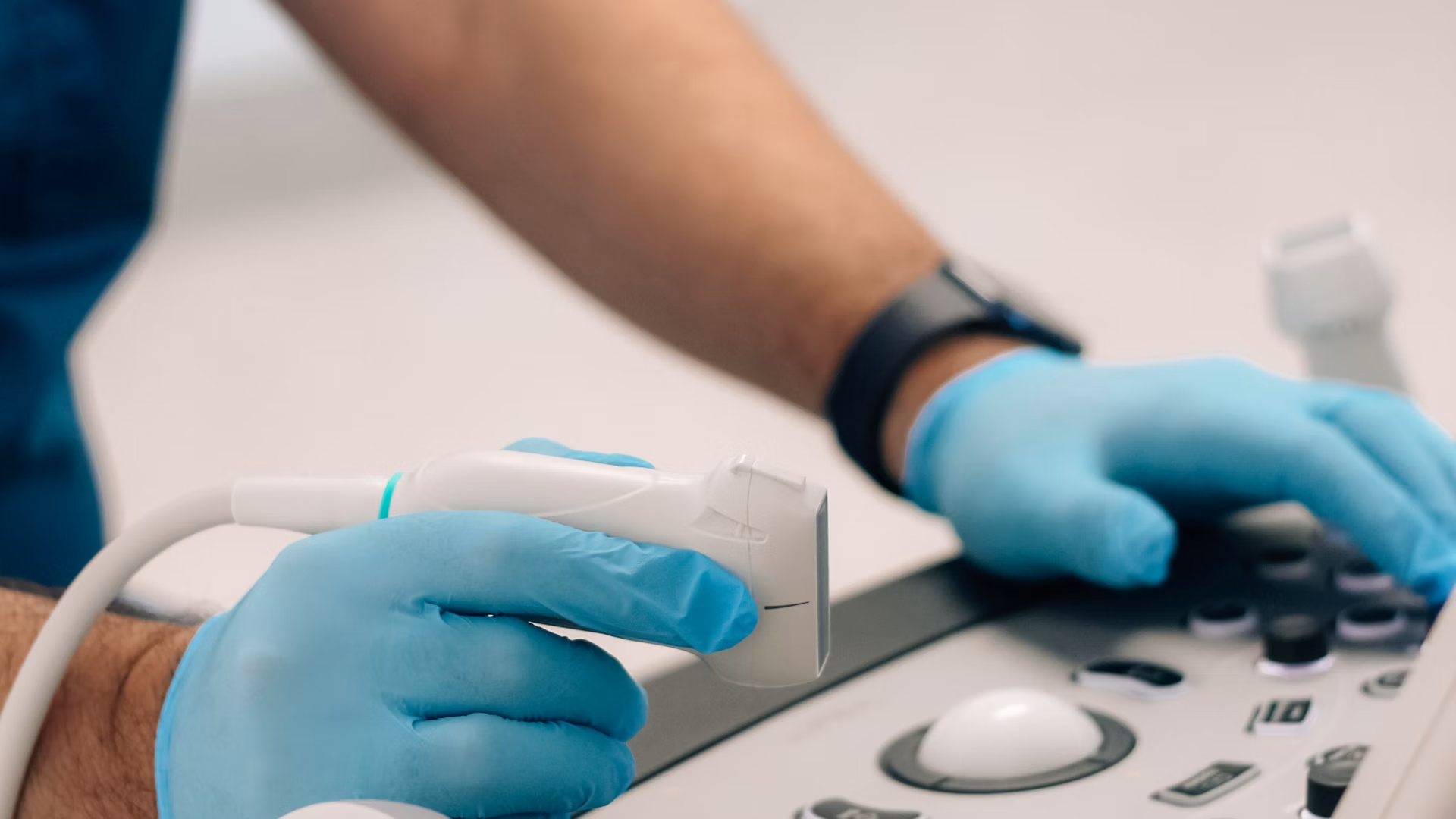
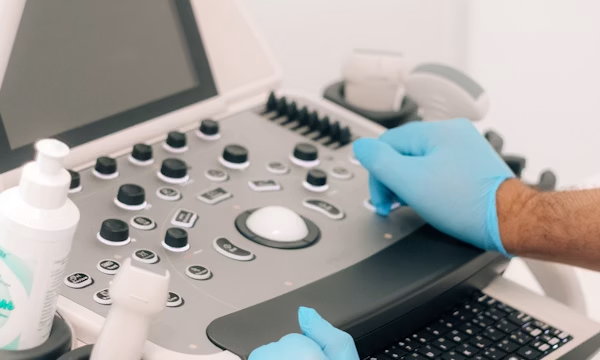
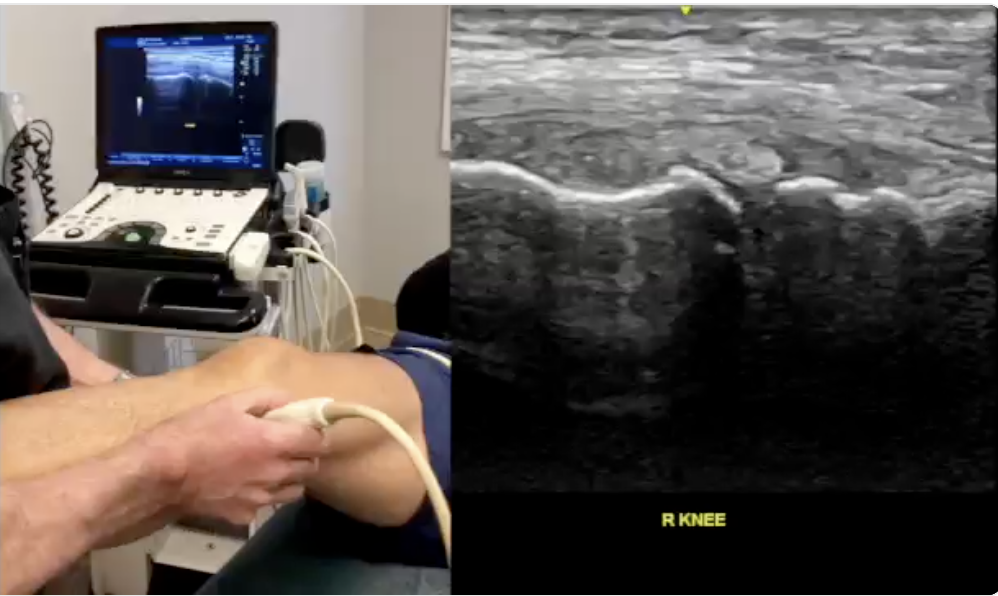
A PRP appointment typically begins with a standard blood draw, similar to routine bloodwork. The sample is processed in a centrifuge on-site, a process that takes roughly 15 to 20 minutes, and the concentrated platelet solution is then injected into the knee joint under ultrasound guidance to ensure accurate placement. The entire visit is usually completed in under an hour, and most patients return to normal daily activities within a day or two, with a brief period of relative rest recommended immediately after injection.
Reference
According to PubMed: Centeno CJ, Berger DR, Pelle AJ, Dodson E, Hernigou P, Murphy MB. Autologous PRP versus hyaluronic acid, corticosteroids or saline for knee osteoarthritis: can blood draw volume serve as a proxy for platelet dose? Int Orthop. 2026. DOI: 10.1007/s00264-026-06782-7