Can Knee Osteoarthritis Be Treated Without Surgery?
For most people with knee osteoarthritis, the assumption is that pain will keep progressing until joint replacement is the only answer left. That's true eventually for some patients, but it's often years further down the road than most people expect, and there is real ground to cover with non-surgical care before that conversation needs to happen. The starting point is almost always the basics: activity modification, targeted strengthening of the quadriceps and hip stabilizers, weight management, and anti-inflammatory strategies. These aren't consolation prizes — for mild to moderate arthritis, they genuinely change how a joint feels day to day, and they cost nothing to try.
What Non-Surgical Treatments Are Available for Knee Osteoarthritis?
When symptoms don't respond fully to conservative measures, orthobiologic injections — PRP, and in select cases BMAC — are the next reasonable step for many patients. These treatments work by calming joint inflammation and supporting the tissue environment inside the joint, not by regrowing cartilage that's already gone. That distinction matters: nothing currently available reverses the structural changes of osteoarthritis, and any practice that suggests otherwise is overselling the science.
Can Non-Surgical Treatment Actually Delay Knee Replacement?
What the evidence increasingly supports is a "bridge" role for regenerative treatment — something that can meaningfully delay the need for joint replacement in appropriately selected patients with moderate arthritis, buying years of comfortable, active function. A 2026 umbrella analysis pooling dozens of high-quality studies found that mesenchymal stem cell therapy significantly reduced the likelihood of progressing to total knee arthroplasty compared with conservative care alone, with conversion rates of roughly 12% versus 23% over 3 to 5 years of follow-up.
That's not a guarantee, and it's not the same evidence base as a head-to-head trial against surgery itself — the same review noted that no study has yet compared regenerative injections directly against joint replacement in this population, which is a real gap in the research. But for patients who aren't ready for surgery, or who want to see how much non-surgical care can offer first, it's a meaningfully different conversation than it was even five years ago.
Is Arthroscopic Surgery a Good Non-Surgical Alternative?
It's also worth addressing a common point of confusion: arthroscopic "cleanout" surgery for an arthritic knee is technically surgery, not a conservative option, and a growing body of research has found this approach doesn't provide lasting relief for arthritis specifically, and in some cases can accelerate the progression of arthritis. For patients trying to stay active and avoid unnecessary procedures, orthobiologic injections represent a genuinely different approach — one aimed at supporting the joint's own healing response rather than mechanically altering it.
How Do I Know If I'm a Candidate for Non-Surgical Care?
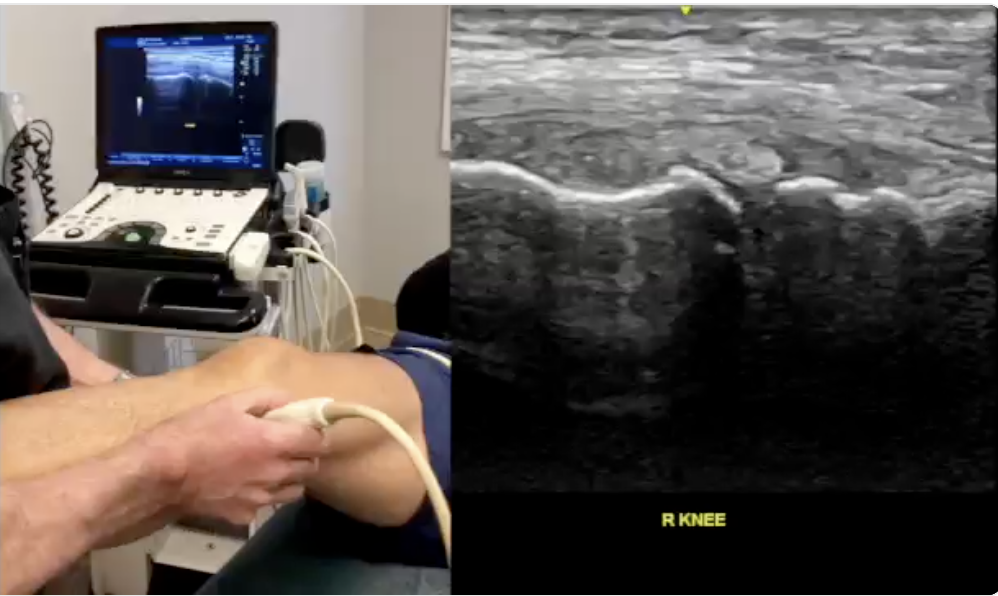
The right next step depends on how much cartilage is left, how severe the arthritis is, and what a patient's goals actually are. Imaging is essential, since the severity of arthritis visible on an X-ray or MRI doesn't always match how much pain a patient reports, and vice versa. A thorough evaluation — not a marketing pitch — should always come first, and candidacy should be revisited over time as a joint's condition evolves.
Reference
According to PubMed: Angthong C, Vichayabhai T, Tatiya-Apitham P, Angthong W. Total Knee Arthroplasty versus Mesenchymal Stem Cell Therapy for Moderate Knee Osteoarthritis: An Umbrella Analysis of Clinical Outcomes, Quality of Life, and Safety. Ortop Traumatol Rehabil. 2026. DOI: 10.5604/01.3001.0055.7770