Why Concentration Matters — and Why Most Clinics Don't Measure It
When patients ask whether PRP will work, they're often focused on the wrong variable. The question isn't whether a clinic offers PRP — nearly all of them do. The question is whether the preparation being injected contains a therapeutically relevant platelet concentration, and whether that concentration was actually verified before the injection.
PRP is not a standardized pharmaceutical. There is no single FDA-approved formulation, no mandated minimum platelet count, and no requirement that a clinic verify what it has produced before injecting it into a patient's joint. This means two patients receiving "PRP" at two different facilities — or even at the same facility on different days — may be receiving preparations that differ dramatically in both platelet concentration and platelet activation state.
For patients, this is important to understand before choosing a provider and before evaluating outcomes. A low-concentration preparation that doesn't perform as hoped is not evidence that PRP doesn't work. It may simply be evidence that the preparation wasn't optimized.
What the Numbers Actually Look Like
To illustrate the range of real-world PRP concentrations, consider two clinical examples drawn from verified preparation records:
Example A: A preparation yielding 8 mL of PRP with a total platelet count of approximately 42.7 billion — representing a 19-fold concentration above the patient's baseline. This is a high-concentration preparation by any clinical standard.
Example B: A preparation yielding 17 mL of PRP with a total platelet count of approximately 92 billion, or roughly 5.4 billion platelets per milliliter. The larger volume reflects a different procedural indication; the platelet density remains therapeutically significant.
Both preparations were produced using Exo Advantage kit systems and verified using a Beckman Coulter DxH 500 hematology analyzer — the same class of instrument used in hospital laboratories. That last detail matters: a cell counter designed for clinical laboratory use produces meaningfully more accurate platelet quantification than point-of-care estimation methods.
What these examples demonstrate is not that more is always better, but that real, measurable variation exists — and that verification is possible and worthwhile.
What "Concentration" Actually Means
PRP is produced by drawing a patient's whole blood, then using a centrifuge to separate its components. The goal is to collect the platelet-rich layer — the fraction of the blood that contains the growth factors and signaling proteins believed to drive the treatment's therapeutic effects — at a higher density than it exists in whole blood.
The result is expressed as a concentration multiple (e.g., "5x baseline") or as an absolute count (e.g., "4.2 billion platelets per mL"). Neither unit is universally superior; what matters is that someone measured it.
The variables that most affect final concentration include:
- The centrifugation protocol (speed, duration, number of spins)
- The collection system used (open vs. closed, kit design, tube additives)
- The patient's own baseline platelet count, which varies significantly between individuals
- Draw speed and technique during aspiration
This is why the same centrifuge and the same kit can produce different results in different patients — and why a provider who tracks and adjusts for these variables will consistently produce better-characterized preparations than one who does not.
What to Ask a Provider
Before proceeding with PRP treatment, patients are entitled to ask:
- What system do you use to produce PRP?
- Do you measure platelet concentration before injecting?
- What concentration range do you typically achieve, and how do you know?
- How does your preparation approach vary by indication (e.g., a tendon vs. a joint)?
A provider who can answer these questions specifically — not in marketing language, but in measurable clinical terms — is demonstrating the kind of rigor that should inform your decision.
Dr. Tortland's Perspective
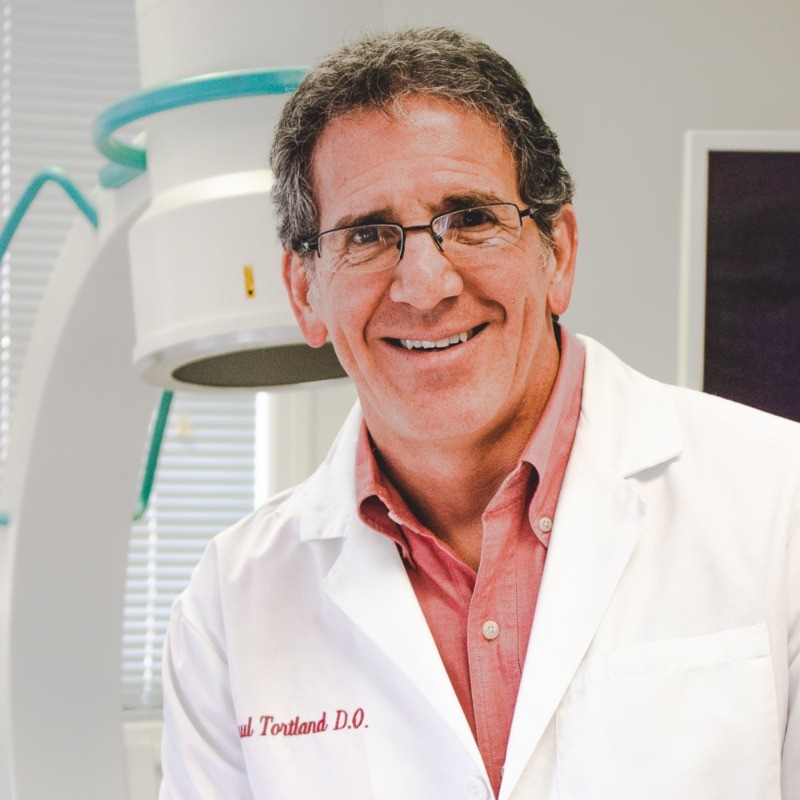
In my practice, every PRP preparation is verified before injection. This isn't standard industry practice — it should be, but it isn't. I track concentration data across preparations not because it makes for better marketing, but because it makes for better medicine. If I'm going to recommend a biologic treatment and explain the evidence behind it, I need to know what I'm actually injecting. The patients who come to me for a second opinion after a disappointing PRP experience elsewhere often received a preparation that was never measured. That's a correctable problem, and it starts with asking better questions.
Current Evidence Context
Research on optimal PRP concentration is ongoing and genuinely unsettled. Studies have examined concentration thresholds for specific indications — knee osteoarthritis, lateral epicondylitis, rotator cuff pathology — with varying findings. The current weight of evidence suggests that concentration matters more for some indications than others, and that platelet activation state (whether the platelets are "resting" or have already been triggered to release growth factors before injection) may be as important as raw count. This is an active area of investigation, not a closed question.